Showing posts with label space. Show all posts
Sep 11, 2009

New Photos from Hubble Space Telescope

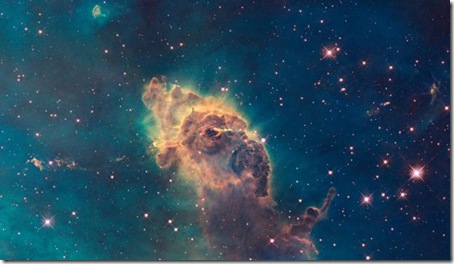
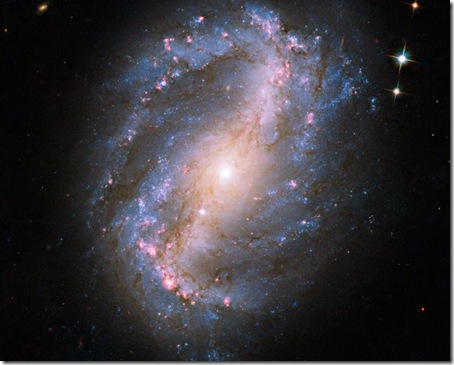
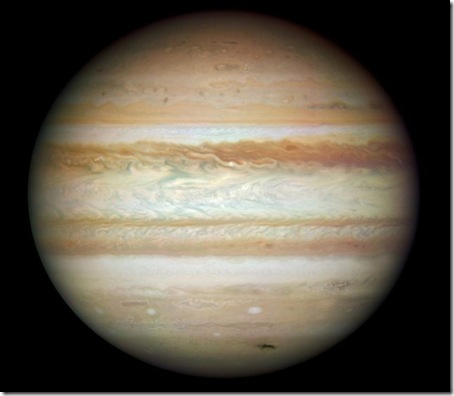
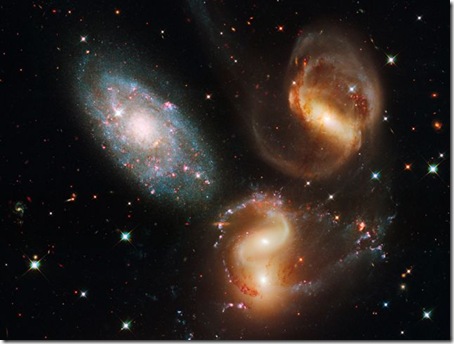
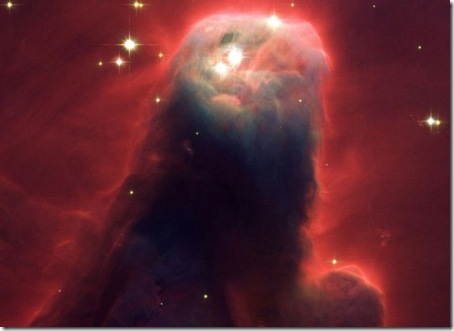
On Wednesday, US space agency NASA unveiled a set of new photos taken by Hubble Space Telescope. It was the first set of photos taken by the 20-year-old earth-orbiting telescope after it's May, 2009 repair. These photos are really impressive. Take a look.

hubble_photos_01

hubble_photos_02

hubble_photos_03 

hubble_photos_05

hubble_photos_06

hubble_photos_12

hubble_photos_04

hubble_photos_07 

hubble_photos_09

hubble_photos_08

hubble_photos_10

hubble_photos_11

Image Credit: NASA

read more “New Photos from Hubble Space Telescope”
Oct 20, 2008

Unusual and Unexpected Colors of Saturn

Unusual and Unexpected Colors of Saturn
Planet Saturn is now sporting very unusual and unexpected colors. Take a look at the picture above. The unusual colors are visible just north of the dark ring shadows. The razor-thin plane of ring particles is visible nearly edge-on across the bottom of the image.

Why this change is color? Scientists thinks that it is related to the changing of seasons in Saturn. But, they are not sure about it. On the picture above, you can also see the moon Titan, which is just above the rings of Saturn.

The robotic Cassini spacecraft, which arrived at Saturn in 2004, is continuously sending back data and images of the planet. Those data and images are helping scientists in understanding the atmosphere, moons, and rings of Saturn.

Via: NASA

read more “Unusual and Unexpected Colors of Saturn”
Oct 12, 2008

Bebo Sends Message to Gliese 581C

Gliese 581C
Popular social networking website Bebo made a history on October 9, 2008 by sending world’s first democratically-created message to the space. The message that contains photos, drawings and text words, was transmitted in binary format, from the National Space Agency of Ukraine's RT-70 radar telescope in Evpatoria. It is directed towards the planet Gliese 581C, which is 120 trillion miles away from earth.

"A Message From Earth", as they called the project, is a first of it's kind attempt to communicate with extra-terrestrial life, through a message created via Internet. In order to create this message, Bebo invited it's 12 million users to submit topics that they would like extra-terrestrials to receive. And the World responded with interesting topics that ranged from the environment to politics and world peace to family relationships. Out of them, Bebo selected 501 items that included photos, drawings and text messages.


Now the digital time capsule from earth is on it's way to planet Gliese 581C. The organisers hope the package will reach its target in early 2029. Well, if someone sends a reply from Gliese 851c, it would not reach earth before 40 years!

read more “Bebo Sends Message to Gliese 581C”
Oct 11, 2008

Destructive re-entry of Jules Verne spacecraft

Destructive re-entry of Jules Verne spacecraft
On September 29, 2008, ESA's Jules Verne spacecraft made a destructive re-entry over the Pacific Ocean. And the resut is the picture above. The spacecraft disintegrated, as designed, at an altitude of 75 kilometers over the uninhabited South Pacific. It's remaining parts safely landed in the heart of Pacific ocean.

Jules Verne spacecraft
Jules Verne ATV, or Automated Transfer Vehicle 001 (ATV-001), was an unmanned European cargo resupply spacecraft named after famous French science-fiction author Jules Verne. The spacecraft was launched on 9 March 2008 on a mission to supply the International Space Station (ISS) with propellant, water, air, and dry cargo. It docked to the ISS on 3 April 2008 after three weeks of testing. On 25 April 2008, Jules Verne also helped in reboosting the space station into a higher orbit. On 5 September 2008, it undocked from the station and manoeuvred to an orbital position 5 km below the ISS. It remained in that orbit until the night of 29 September, when it made the destructive re-entry, as planned.

Photo: ESA

read more “Destructive re-entry of Jules Verne spacecraft”
Oct 2, 2008

Phoenix detects Snow Fall on Mars!

Phoenix in Mars

After uncovering ice in the soil of planet Mars, NASA has now spotted snow falling from Martian clouds. On Monday, NASA reported that its Phoenix Mars Lander picked up signs of snow drifting down at an altitude of 4 kilometers (2.5 miles) above the landing site. But the snow particles appears to vaporize before touching the Martian soil.

Phoenix, whose mission was to study the history of water in the arctic area of Mars, has already proved that ice is present in the subsurface soil on Mars. Originally Phoenix mission was planned for three months, which is now in fifth month. Now it is facing scarcity of solar energy and soon Phoenix mission will come to an end.

"For nearly three months after landing, the sun never went below the horizon at our landing site," said Barry Goldstein, JPL Phoenix project manager, in a statement. "Now it is gone for more than four hours each night, and the output from our solar panels is dropping each week. Before the end of October, there won't be enough energy to keep using the robotic arm."

Image: NASA
read more “Phoenix detects Snow Fall on Mars!”
Sep 28, 2008

View of Earth and Moon from Mars

View of Earth and Moon from Mars
Think about yourself standing on planet Mars and looking towards our Earth. If you are lucky enough, you may be able to see something like the picture above. Yes, you will be able to see both Earth and Moon in the same sky. Though it is not possible to get there physically, we can use our advanced spacecrafts to take pictures of views like this.

The above image was taken n October 3, 2007, by the High Resolution Imaging Science Experiment (HiRISE) camera on NASA's Mars Reconnaissance Orbiter. At the time the image was taken, Earth was 142 million kilometers (88 million miles) from Mars, giving the HiRISE image a scale of 142 kilometers (88 miles) per pixel, an Earth diameter of about 90 pixels and a moon diameter of 24 pixels. The phase angle is 98 degrees, which means that less than half of the disk of the Earth and the disk of the moon have direct illumination.

Image Credit: NASA/JPL-Caltech/University of Arizona
read more “View of Earth and Moon from Mars”
Sep 20, 2008

Chandrayaan-1 : India's First Moon Mission

Chandrayaan-1
On Thursday, Indian Space Research Organisation (ISRO) unveiled India’s first mission to the Moon Chandrayaan-1. The Chandrayaan-1 mission is aimed at high-resolution remote sensing of the moon in visible, near infrared(NIR), low energy X-rays and high-energy X-ray regions.

Chandrayaan-1
The Chandrayaan-1 is a 590-kg spacecraft and it will be launched by a India's own Polar Satellite Launch Vehicle (PSLV-XL) from Satish Dhawan Space Centre at Sriharikota. The spacecraft will carry 11 scientific payloads from six different countries - India, UK, USA, Germany, Sweden and Bulgaria. The launch window is between October 19 and October 28. And according to some news sources October 19 is the probable date of liftoff.

During it's two year mission, Chandrayaan-1 will send back digital elevation maps of the moon and will try to find the traces of atomic elements such as radon, uranium and thorium in the surface of Moon. It will also look into the possibility of finding water on the moon with the help of pictures taken from high resolution cameras.

read more “Chandrayaan-1 : India's First Moon Mission”

Most Distant Gamma-ray Burst


On September 13, US space agency NASA's Swift satellite detected a beautiful gamma-ray burst that came from the edge of our Universe! The burst, named as GRB 080913, took 12.8 billion years to reach Earth and this is the farthest gamma ray explosion ever detected. Take a look at the picture above.

The burst was detected by Swift's Burst Alert Telescope, at 0547 GMT on 13 September, in the constellation Eridanus. Then, astronomers around the World detected its afterglow with the help of telescopes. Analysis of the light spectrum revealed that it came from 12.8 billion light years away. This distance is 70 million light years further than the previous record holder GRB050904. GRB 080913's "lookback time" reveals that the burst occurred less than 825 million years after the universe was born.

read more “Most Distant Gamma-ray Burst”
Sep 16, 2008

NASA announces MAVEN Mission

MAVEN Mars Mission
NASA has announced it's next Mars mission as a part of the Mars Scout Program. Out of 20 mission investigation proposals, NASA has selected the Mars Atmosphere and Volatile EvolutioN (MAVEN) spacecraft, which will provide information about the Mars' atmosphere, climate history and potential habitability in more detail than ever before.

The MAVEN mission will cost $485 million and is scheduled for launch in late 2013. The spacecraft will arrive at the red planet in the fall of 2014, when will use it's propulsion system to enter an elliptical orbit ranging 90 to 3,870 miles above the planet. MAVEN will carry eight scientific instruments that will perform various tests and measurements during a full Earth year mission. The spacecraft is also expected to collect samples of Mars' upper atmosphere by going down to an altitude of 80 miles above the surface of the planet.

"This mission will provide the first direct measurements ever taken to address key scientific questions about Mars' evolution," said Doug McCuistion, director of the Mars Exploration Program at NASA Headquarters in Washington.


NASA

read more “NASA announces MAVEN Mission”
Aug 15, 2008

Orion spacecraft launch delayed


NASA has announced that the launch of the Orion, the spacecraft designed to replace the space shuttle fleet, has been pushed back by one year. Now, NASA hopes that the Constellation Program will make its first flight to the International Space Station on or before 2014. Earlier the first flight of Orion was scheduled for September 2013.


The Orion is a part of the ambitious Constellation program, a NASA program that includes new launch vehicles and a lunar lander. As the present space shuttle fleet will be decommissioned in late September 2010, the new space crafts will re-supply the International Space Station and carry out other special missions such as landing on the moon. Until the Orion space crafts enters into service, NASA will have to depend on Russian Soyuz spacecrafts for supplying astronauts aboard the ISS.


read more “Orion spacecraft launch delayed”
Aug 14, 2008

Detailed images of Saturn's Enceladus


NASA's Cassini spacecraft has just sent back some stunningly beautiful and detailed images of Saturn's icy moon Enceladus. Take a look at the images that were taken when Cassini was sweeping past just 30 miles above Saturn's surface.


The first four-year mission of Cassini was completed last month and now it is on a two-year extension mission. Scientists hopes that it will provide some more interesting information about the planet.

read more “Detailed images of Saturn's Enceladus”
Jul 16, 2008

The Pinwheel Galaxy


This is an image of the Pinwheel Galaxy. Beautiful. Isn't it? The Pinwheel Galaxy or Messier 101 or NGC 5457, is a face-on spiral galaxy situated at about 27 million light-years away in the constellation Ursa Major. Pinwheel Galaxy was discovered by Pierre Méchain on March 27, 1781, and he subsequently communicated his discovery to Charles Messier who verified its position and added it to the Messier Catalogue as one of the final entries.


The Pinwheel Galaxy is a relatively large galaxy compared to our Milky Way. With a diameter of 170,000 light-years it is nearly twice the size of the Milky Way. On photographs M101 can be seen to be asymmetrical on one side. It is thought that in the recent past (speaking in galactic terms) M101 underwent a near collision with another galaxy and the associated gravitational tidal forces caused the asymmetry.


read more “The Pinwheel Galaxy”
Jul 14, 2008

The Baby Boom Galaxy


By using NASA's Spitzer Space Telescope, Hubble Space Telescope and some other telescopes, a group of astronomers has spotted a distant galaxy that is pumping out stars at a rate of up to 4,000 per year. So, this galaxy is a "Star Factory" and the astronomers have nicknamed it as the "Baby Boom Galaxy".

Peter Capak of NASA's Spitzer Science Center at the California Institute of Technology and his colleagues said that the galaxy is 12.3 billion light-years away and belongs to a group of galaxies called Starburst Galaxies. It has been pumping out stars since the universe was 1.3 billion years old.
read more “The Baby Boom Galaxy”
Jul 12, 2008

Water found in Moon Samples


A group of researchers led by Brown University geologist Alberto Saal has discovered water inside ancient moon samples brought back to earth by astronauts of Apollo missions in 1960s and 1970s. The discovery strongly suggests that water has been a part of the Moon since its early existence. And this discovery could change the way we think about the past of moon.

The lunar water was found inside volcanic glass beads brought by Apollo astronauts. The glass beads range in color from green to yellow-brown to red and were formed from droplets of molten lava that spewed from fire fountains reaching down deep within the primitive lunar interior. Researchers found up to 46 ppm of water within the glass beads.

Then they used modeling to estimate how much water originally existed in the magma within the moon's interior and estimated that the glass beads may contain upto 745 ppm of water. This value is similar to solidified lava that came up from the Earth's upper mantle through undersea vents. What does it means? It means, either the moon got water from Earth during its violent creation, or else water gathered from elsewhere within 100 million years of the impact as the moon solidified. Only further research will clearify these assumtions.

read more “Water found in Moon Samples”
Jul 11, 2008

Star Cluster with 3 Birthdays


Astronomers have found three different age groups in the ancient open star cluster NGC 6791. It is like having three different clocks in your house, each chiming at a different time. These new findings may fundamentally challenge the way astronomers estimate ages of star clusters.

How this mystery was uncovered? Using NASA's Hubble Space Telescope, astronomers were busy in studying the dimmest stars in the NGC 6791, which is one of the oldest and largest open clusters known, about 10 times larger than most open clusters and containing roughly 10,000 stars. The cluster is located in the constellation Lyra. The astronomers found that three different populations of stars exist in an object where all the stars should have formed at the same time out of an interstellar cloud of gas and dust. How this could happen? Now, astronomers are in great puzzle.


Two of the star populations are burned-out stars called white dwarfs. One group of these low-wattage stellar remnants (red circles) appears to be 6 billion years old, another (blue circles) appears to be 4 billion years old. The ages are out of sync with those of the cluster's normal stars, which are 8 billion years old.

"The age discrepancy is a problem because stars in an open cluster should be the same age. They form at the same time within a large cloud of interstellar dust and gas. So we were really puzzled about what was going on," explained astronomer Luigi Bedin, who works at the Space Telescope Science Institute in Baltimore, Md. Link


read more “Star Cluster with 3 Birthdays”
Jul 3, 2008

Beautiful remnant of a Supernova


Take a look at the image. This stunning image was captured by the Hubble Space Telescope. The red patch on the picture denotes the remnant of a supernova, caused by a massive steller explosion that was recorded more than 1000 years ago. This image measures five million light years across and shows the expanding blast waves.

Astronomers first detected a faint optical emission from the supernova remnant back in 1976. They worked out that the shock wave from the explosion had expanded at a rate of nearly 20 million miles per hour. Presently, this red patch has a diameter of nearly 60 light-years and is expanding at a rate of about six million miles per hour.

read more “Beautiful remnant of a Supernova”
Jun 28, 2008

Galaxies of Coma Cluster


Take a look at the picture above. This is a picture of the Coma Cluster, a large cluster of galaxies that contains more than 1000 galaxies. Each of these galaxies houses billions of stars. The Coma Cluster is so big it takes light millions of years just to go from one side to the other! The cluster's mean distance from Earth is 99 Mpc (321 million light years). Light from the Coma Cluster takes hundreds of millions of years to reach earth.


Most galaxies in Coma and other clusters are ellipticals, although some are spirals. The central region of Coma Cluster is dominated by two giant elliptical galaxies: NGC 4874 and NGC 4889. Both dwarf, as well as giant ellipticals, are found in abundance in the Coma Cluster. NASA


read more “Galaxies of Coma Cluster”
Jun 24, 2008

International Space Station nearing completion


The construction of International Space Station (ISS) is gradually moving towards completion. Earlier this month, astronauts added the Japanese Kibo Science Laboratory to the space station. The above picture shows different modules of ISS, along with the big solar panels and a robotic arm. This picture was taken by the Discovery space shuttle crew, after leaving the ISS this month.

The construction of ISS was started back in 1998. Take a look at the following picture to see how ISS looked like seven years earlier. This picture was taken by Endeavor crew in December, 2001. There is definitely a big difference between these two picture.


read more “International Space Station nearing completion”
Jun 20, 2008

Ice found in polar region of Mars


Scientists of NASA said that they have discovered ice in the polar region of planet Mars. The ice was discovered when the Phoenix Mars lander was digging a trench in the soil of Martian arctic region. During the digging process, chunks of bright material were exposed, which later vanished. Take a look at the photograph above. So, scientists believes that the chunks of bright material was frozen water, that vaporized after being exposed. NASA


read more “Ice found in polar region of Mars”
Jun 14, 2008

New Spacesuits for Astronauts


NASA has chosen a new contractor to build it's new spacesuits for the post-space shuttle Constellation program. The current space shuttle fleet will retire in 2010, and the Constellation missions are set to begin in 2015. The current spacesuits used by spacewalking astronauts were designed for floating in weightlessness, not walking on the moon. So, to build new spacesuits for use in the future space missions, NASA has chosen Oceaneering International Inc of Houston.

Oceaneering International Inc defeated a bid by Exploration Systems and Technology, a joint venture of current lead spacesuit contractors United Technologies Corp's Hamilton Sundstrand of Windsor Locks, Connecticut, and ILC Dover of Frederica, Delaware. The contract, worth up to $745 million, includes design, testing, evaluation and production of two types of spacesuits. One would be worn by astronauts traveling on NASA's new Orion spaceships and be used for emergency spacewalks, and another for astronauts working on the lunar surface.

read more “New Spacesuits for Astronauts”
Related Posts Plugin for WordPress, Blogger...